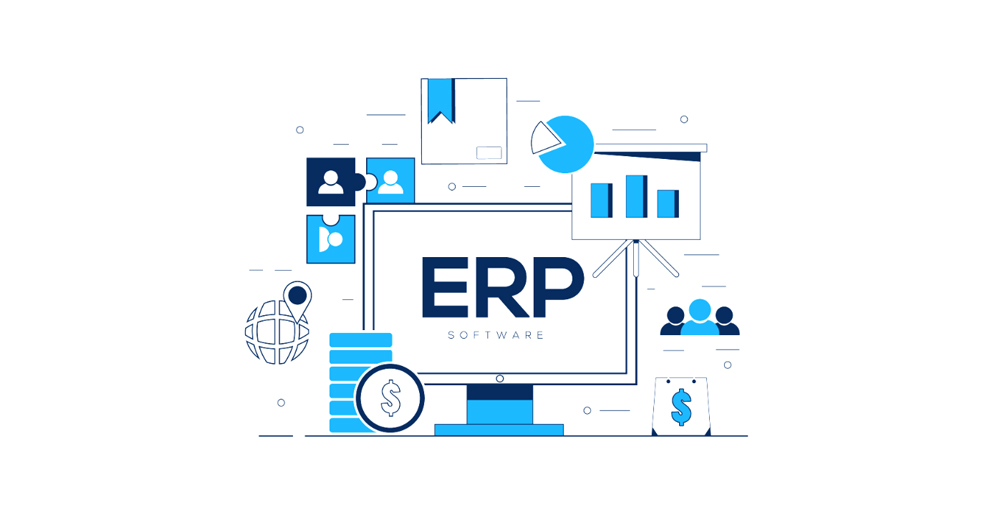
Custom ERP software stands out as the smart choice for companies tired of wrestling with rigid, one-size-fits-all systems. Tailored precisely to your operations, it delivers unmatched efficiency and scalability that off-the-shelf options simply can’t match.
Why Custom ERP Beats Generic Solutions
Off-the-shelf ERP packages force businesses into predefined workflows, often requiring costly workarounds or add-ons. Custom ERP, built from the ground up around your unique processes, eliminates these frustrations by integrating seamlessly with your existing tools and future growth plans. For growing enterprises in manufacturing, retail, or distribution—especially in competitive markets like India— this means real-time data flow across sales, inventory, HR, and finance without manual data entry errors that plague generic systems.
Consider a mid-sized Ahmedabad-based distributor managing FMCG products: a custom ERP could automate supplier orders based on real-time stock levels, predict demand spikes during festivals like Diwali, and sync with local GST compliance—features no standard software tweaks in without heavy customization fees. This precision drives a 30-50% productivity boost, as teams focus on strategy rather than data reconciliation.
Boosted Productivity and Workflow Automation
One standout benefit comes from automation tailored to your daily grind. Custom ERP identifies repetitive tasks—like invoice matching or inventory audits—and handles them via smart rules engines, freeing staff for high-value work. In 2026, with remote-hybrid teams common, these systems incorporate mobile dashboards for on-the-go approvals, slashing approval cycles from days to hours.
Take a recruitment agency juggling candidate pipelines: a bespoke ERP might auto-score resumes against job reqs, trigger interview scheduling via integrated calendars, and update client portals instantly. No more Excel chaos or duplicated efforts. Studies show such systems cut operational time by up to 40%, directly padding your bottom line. Plus, as your business scales—say, adding new warehouses—the ERP evolves without downtime, unlike rigid platforms demanding full migrations.
Scalability Tailored to Your Growth Trajectory
Growing businesses hit walls with generic ERPs that buckle under volume or demand expensive upgrades. Custom ERP scales linearly: add users, modules, or global locations without ripping out the core system. Developers design it modular, so you plug in AI-driven forecasting for sales teams or blockchain for supply chain transparency as needs arise.
For an Indian affiliate marketer expanding into e-commerce, this means starting with core CRM-inventory syncs and later bolting on options trading analytics or multi-channel lead tracking. No vendor lock-in either—you own the code, negotiating maintenance on your terms. Forward-thinking firms report 25% faster scaling, turning growth pains into competitive edges.
Superior Data Security and Compliance Control
Data breaches cost millions, and generic ERPs often expose vulnerabilities through third-party plugins. Custom ERP lets you embed industry-specific security—like role-based access for finance vs. sales, end-to-end encryption, and automated audit logs—from day one. In regulated sectors like fintech or healthcare, build in RBI/GDPR compliance checks that flag issues pre-submission.
Imagine a trading firm in Gujarat: custom modules could secure options data with multi-factor auth and anomaly detection, alerting on unusual trades instantly. This beats patchwork security in SaaS tools, where updates lag threats. Ownership means swift patches too—no waiting on vendor queues—reducing breach risks by 60% per industry benchmarks.
Seamless Integration with Your Tech Stack
Siloed systems breed errors; custom ERP acts as the central nervous system, integrating with CRMs like Salesforce, comms like Twilio, or niche tools like distributor management systems. APIs connect everything fluidly—WhatsApp bots for customer queries feeding straight into inventory updates.
A content creator scaling YouTube/Rumble channels might link custom ERP to Semrush for SEO insights, auto-generating reports on affiliate performance. This holistic view empowers decisions: spot underperforming niches, optimize ad spends, or pivot inventory. Integration costs drop 50% long-term, as you’re not bolting on expensive middleware.
Cost Efficiency Over the Long Haul
Upfront costs intimidate, but custom ERP’s TCO (total cost of ownership) shines brighter. No perpetual licensing fees or feature bloat—you pay for what you use, with ROI hitting in 12-18 months via efficiency gains. Factor in reduced training (intuitive UI matches your lingo) and minimal downtime.
For SMEs, cloud-hosted custom ERPs slash hardware needs, with pay-per-use scaling. A real-world example: a logistics firm saved $200K annually by ditching three siloed apps for one custom powerhouse. Hidden savings compound—fewer errors mean less rework, boosting margins 15-20%.
Enhanced Customer Experience and Insights
Customers demand speed; custom ERP delivers by unifying data for 360-degree views. Track interactions across touchpoints, personalize offers, and predict churn with built-in analytics. Retailers use it for dynamic pricing based on real-time stock, while agencies forecast client needs from historical data.
In your wheelhouse—SEO and affiliates—this translates to lead scoring tied to conversion funnels, optimizing campaigns on autopilot. Result? 25% higher retention and upsell rates, as insights turn reactive service into proactive delight.
Real-World Implementation Success Stories
Ahmedabad entrepreneur Raj built a custom ERP for his dating affiliate network, integrating lead gen with payment gateways and compliance trackers. Traffic doubled in six months, with zero compliance hiccups during audits. Similarly, a Mumbai trader wove in NSE options data feeds, cutting analysis time from hours to minutes—key in volatile 2026 markets.
These aren’t hypotheticals; they’re proven paths. Start small: pilot with finance-inventory, then expand. Partner with devs versed in your niche for smooth rollout.
Future-Proofing with AI and Emerging Tech
2026 brings AI ubiquity—custom ERP embeds it natively: predictive maintenance for manufacturers, chatbots for support, or NLP for contract analysis. IoT integration tracks assets live, while blockchain secures supplier chains. Unlike off-the-shelf, updates align with your roadmap, not vendor whims.
This agility positions you ahead: while competitors retrofit, you’re innovating.
Overcoming Common Challenges
Scope creep? Nail requirements via workshops. Budget overruns? Agile dev with milestones. Pick partners with ERP portfolios—expect 6-12 months for MVP. Maintenance? Annual contracts at 15-20% of build cost keep it humming.
In conclusion, custom ERP software isn’t a luxury—it’s your 2026 growth engine. By aligning tech with strategy, you unlock productivity, security, and profits that generic tools can’t touch. Invest now; outpace tomorrow’s competition. Ditch the square peg—craft your round hole.
More Article: Custom ERP Software vs Off-the-Shelf: Complete Cost & Feature Comparison
Frequently Asked Questions (FAQs)
-
What exactly is custom ERP software?
Custom ERP is a bespoke system designed specifically for your business processes, unlike generic software that forces adaptations. -
How much does custom ERP development cost in 2026?
Ranges from $50K-$500K+ depending on scope; factor 15-20% annual maintenance. ROI typically hits within 18 months. -
Is custom ERP better than Salesforce or SAP?
Yes, for unique workflows—tailored fit trumps add-on costs and limitations. -
How long to implement custom ERP?
6-12 months for core modules; phased rollouts minimize disruption. -
Can small businesses afford custom ERP?
Absolutely—cloud options start low, scaling with revenue. Ideal for 50+ employee firms. -
What industries benefit most from custom ERP?
Manufacturing, distribution, recruitment, affiliates—any with complex, unique ops. -
Does custom ERP integrate with Twilio or Five9?
Seamlessly via APIs; build chat/voice modules natively. -
How secure is custom ERP compared to cloud SaaS?
Superior—you control encryption, access, and updates tailored to threats. -
Can I start with a prototype?
Yes, MVP approach tests core features before full build. -
What’s the first step to get custom ERP?
Audit processes, define must-haves, then RFP vetted developers. -
Will custom ERP handle Indian GST/NSE compliance?
Fully—embed rules for real-time filings and trading data. -
How does AI enhance custom ERP in 2026?
Predictive analytics, automation, and insights boost efficiency 30%+.