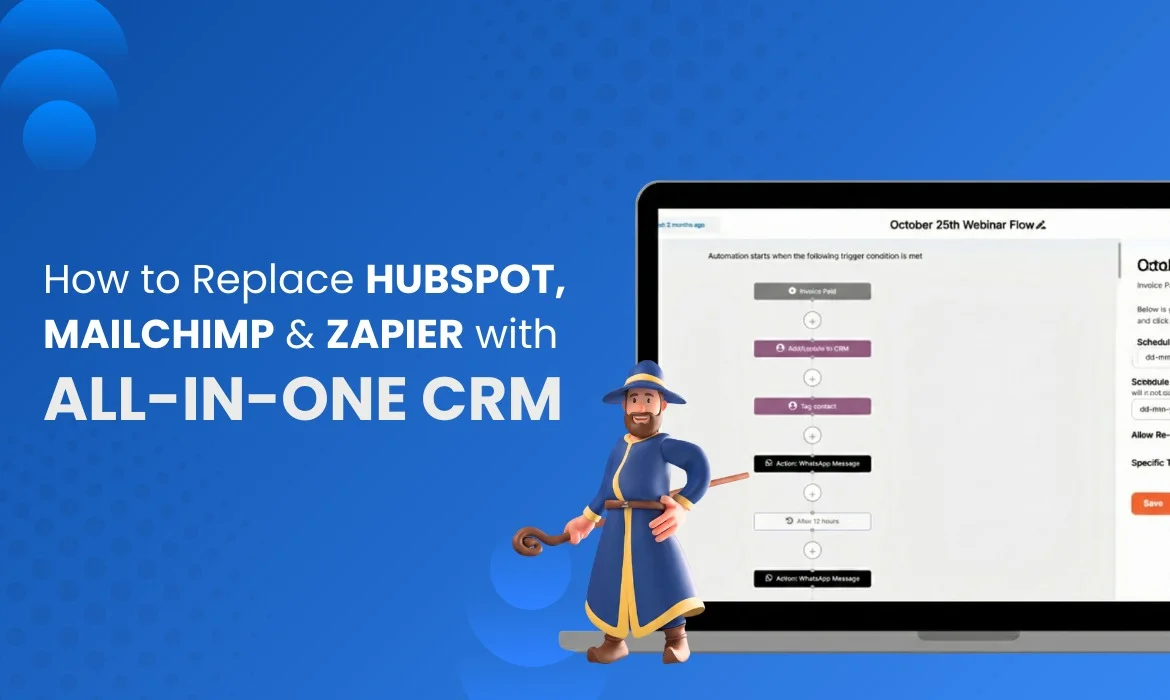
Can HubSpot replace Mailchimp for e‑commerce email marketing campaigns? In many cases, yes—especially if you want deeper CRM integration and multi‑channel automation, but Mailchimp can still be better for lean, store‑focused setups and lower budgets.
What Each Platform Is Built For
For an e‑commerce brand, it helps to see the core “philosophy” behind both tools.
-
HubSpot is an all‑in‑one growth platform combining CRM, email, automation, site, and sales tools for a full customer journey.
-
Mailchimp is primarily an email and marketing platform, optimized for quick campaign launches for small to mid‑size e‑commerce stores.
In practice, that means HubSpot shines when you want to connect store data with long‑term lead nurturing and sales, while Mailchimp shines when you mainly want powerful, easy email and basic automation tied to your store.
E‑Commerce Integrations And Data
Both platforms integrate with major e‑commerce systems, but how they use that data is different.
-
HubSpot connects natively with Shopify, BigCommerce, WooCommerce, Magento, and more, pushing order and customer data into its Smart CRM.
-
Mailchimp also integrates with platforms like Shopify and WooCommerce, then focuses that data on segmentation and revenue‑driven email flows such as product recommendations and cart recovery.
With HubSpot, e‑commerce data feeds a central CRM so you can analyze lifetime value, track multi‑channel touchpoints, and build campaigns that span email, ads, forms, and sales outreach. Mailchimp uses store data more narrowly, mostly to drive smarter email lists, recommendations, and automated journeys inside the email channel itself.
Email Features For E‑Commerce Campaigns
Both tools are strong in email, but they emphasize slightly different strengths.
-
HubSpot offers CRM‑driven personalization, lifecycle‑based targeting, and advanced A/B testing inside a drag‑and‑drop editor.
-
Mailchimp provides polished templates, an intuitive editor, and many ready‑made journeys aimed directly at online stores like welcome series, abandoned cart, and product follow‑ups.
For a growing store, HubSpot’s ability to personalize by past visits, purchases, and lifecycle stage can make your campaigns feel more tailored and “smart” across the customer journey. For a lean team, Mailchimp’s library of built‑in e‑commerce flows and templates can get you sending effective campaigns quickly with less setup time.
Automation And Customer Journeys
Automation is where the replacement question becomes serious: can HubSpot fully do what Mailchimp does for e‑commerce journeys, and more?
-
HubSpot provides multi‑step workflows that connect email, CRM updates, lead scoring, internal notifications, and even sales tasks.
-
Mailchimp focuses on streamlined email journeys—for example, abandoned cart reminders, post‑purchase flows, win‑back campaigns, and re‑engagement emails.
If your goal is sophisticated, cross‑channel automation based on complex triggers such as “viewed pricing page + added to cart but no purchase + high score,” HubSpot offers more flexibility. If your priority is simply to keep email flows like cart recovery, order updates, and basic retargeting running smoothly, Mailchimp’s more focused automation can be simpler and cheaper to manage.
Analytics, Reporting, And ROI Visibility
To decide whether HubSpot can replace Mailchimp, you also need to look at reporting and how clearly each tool links email to revenue.
-
HubSpot includes detailed performance analytics, attribution reporting, and revenue tracking tied to CRM records and pipelines.
-
Mailchimp tracks campaign performance with open, click, and revenue metrics, and offers predictive segmentation to find likely buyers.
With HubSpot, you can see how email, ads, landing pages, and sales activity all contribute to closed‑won deals or repeat purchases. With Mailchimp, you mainly see how specific emails and journeys contribute to store revenue, which is often enough for smaller e‑commerce operations focused on quick ROI reads.
Pricing, Scale, And When Each Makes Sense
Pricing heavily influences whether you should actually replace Mailchimp with HubSpot for e‑commerce campaigns.
-
HubSpot tends to cost more as you layer on advanced automation, marketing, and sales features, but you get an integrated system rather than a stack of separate tools.
-
Mailchimp is often more affordable for smaller lists and simpler needs, and it lets you pay primarily for email functionality instead of a full platform.
HubSpot becomes more attractive when you are ready to centralize your tech stack and view email as one part of a broader growth engine. Mailchimp stays attractive when your store is smaller, your team is lean, and you want a powerful email‑centric solution without committing to an all‑in‑one ecosystem.
More Article: Can HubSpot Replace Mailchimp for Email Automation and CRM?
Can HubSpot Fully Replace Mailchimp For E‑Commerce?
For many e‑commerce brands, the answer is yes—HubSpot can replace Mailchimp, but only if your strategy justifies what HubSpot is built to do.
HubSpot can cover nearly every e‑commerce email use case Mailchimp handles, including welcome series, abandoned carts, product recommendations, and post‑purchase nurturing, while also adding CRM‑driven segmentation and cross‑channel automation. Where Mailchimp still has an edge is in cost for smaller stores, email‑first simplicity, and pre‑built journeys that are tightly tuned to common shop workflows.
If your e‑commerce brand is scaling, needs deeper personalization, and wants one platform to align marketing, sales, and service, moving entirely to HubSpot is realistic. If you mainly care about sending strong, store‑centric email campaigns on a budget, staying with Mailchimp or using it alongside HubSpot’s CRM may still be the smarter move.
For a detailed feature‑by‑feature breakdown of HubSpot and Mailchimp specifically for e‑commerce email, see this in‑depth comparison from Pixcell.